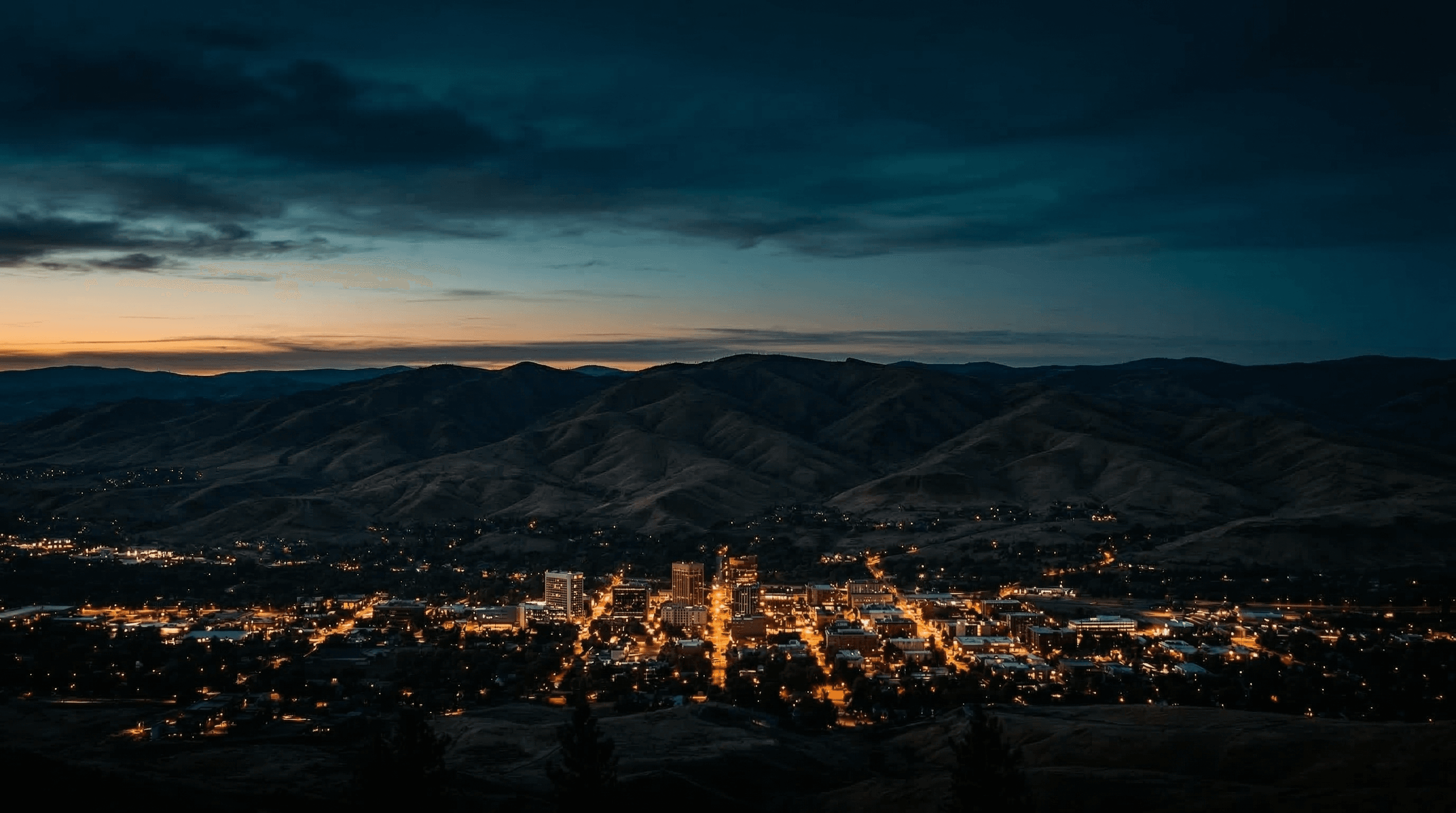
Building a Software Studio in a City That Still Surprises People
When we tell people we run a development studio out of Boise, Idaho, the most common response is a pause. Not a rude pause. More of a processing pause. The kind where someone is reconciling "builds accessible web applications for federal agencies" with "Idaho." We get it. Idaho is not the first state that comes to mind when people think about software development. It is not the second or third either. It is probably somewhere around twelfth, behind states that do not actually have a notable tech presence but have better marketing.
And that is fine. Boise's tech scene does not need to be San Francisco. It does not need to be Austin. It does not even need to be Denver, which is where everyone assumes we should have set up shop because Denver has mountains too and a more recognizable tech ecosystem. We chose Boise because after looking at where we wanted to live, where the work actually is, and where the math made sense for running a studio without burning through venture capital we do not have and do not want, the Treasure Valley kept being the answer.
This post is an honest look at what it is like to build and run a software company here. Not a Boise booster piece. Not a "top 10 reasons to move your startup to Idaho" listicle. Just observations from someone who has been doing this here long enough to know what works, what does not, and what everyone keeps ignoring.
What Boise Gets Right
The cost of running a studio here is genuinely reasonable. This matters more than people in high-cost markets want to admit. When your overhead is lower, you can be pickier about the work you take. You do not have to say yes to every project because rent is $14,000 a month and you have six employees who all need Bay Area salaries. We can take on the projects that are actually interesting, pass on the ones that are not a good fit, and still keep the lights on. That is not a luxury. That is how you do good work. You need room to say no. Boise gives you that room.
The government and defense ecosystem is real, and it is big. Mountain Home Air Force Base is 45 minutes away. The Idaho National Laboratory is a few hours east. Boise itself has a significant state government presence, and state agencies need software the same way federal ones do, just with smaller budgets and the same compliance requirements. Every single one of these organizations needs software that meets Section 508 accessibility standards, which happens to be exactly what we build. Most Boise tech companies are chasing consumer startups or SaaS plays. The government work is right here, it pays on time, and almost nobody is competing for it at the quality level these agencies actually need. We find that very convenient.
Reputation travels fast in a small market. In a city of 8 million people, you can do mediocre work and disappear into the crowd. In a metro area the size of the Treasure Valley, everyone knows everyone in tech within about two handshakes. Your last project's PM knows your next client's CTO because they were on the same kickball team in 2019. This is either terrifying or reassuring, depending on the quality of your work. For us, it has been good. Word of mouth is our best marketing channel, and it costs exactly zero dollars. We have never run a paid ad. Every client has come from referrals, inbound from the website, or someone who saw our work on a previous project. Small markets reward good work faster than big ones.
Quality of life is a business advantage that nobody puts in their pitch deck. This sounds soft. It is not. When you live somewhere with a 15-minute commute, access to mountains and rivers, a cost of living that does not require you to have a roommate at 35, and a pace that lets you actually think instead of just react, you do better work. That is not a Boise tourism ad. That is an observation from someone who has worked in high-pressure environments in larger cities and watched talented people burn out because their entire salary went to rent and their entire commute went to sitting in traffic wondering if this was really the dream. Boise is not perfect. But it is remarkably livable, and livable translates to sustainable, and sustainable translates to a studio that is still here in 10 years doing good work instead of flaming out in three.
The Talent Reality
The talent pool in Boise is smaller than what you would find in Seattle, Portland, or the Bay Area. That is just true. Anyone who tells you otherwise is selling you a coworking space membership.
But "smaller" does not mean "worse." The developers and designers who are in the Treasure Valley tend to be here on purpose. They chose this place. They are not here because they could not get a job somewhere else. They are here because they did the same math we did and arrived at the same answer. People who choose where they live tend to stick around, which means lower turnover, which means the person who built your feature last year is the same person maintaining it this year. In software development, that continuity is worth more than any job posting will ever tell you.
Remote work changed the talent equation permanently. We can hire nationally and live locally. The engineer working on a federal accessibility project does not need to live in Washington, D.C. They need to be good at their job and available during working hours. Where they eat dinner is irrelevant. This was true before 2020, but it took a pandemic for the industry to collectively admit it.
The honest gap: Boise does not have as many senior engineers with 15+ years of specialized experience as a larger market would. If you need a team of eight principal-level distributed systems engineers by next month, you are probably not finding them all in the Treasure Valley. But if you need a focused studio that builds accessible, well-engineered web applications, we are right here, and we are not leaving.
What Boise's Tech Scene Still Needs
We said this was not a booster piece and we meant it. The Treasure Valley has gaps, and pretending otherwise helps nobody.
There are not enough mid-stage companies. The Boise tech ecosystem has two very well-populated categories: solo freelancers and consultants on one end, and large enterprise IT departments on the other. The gap in the middle, companies with 10 to 50 people building product, is thinner than it should be. Studios like ours exist in that gap, but there are not enough of us. When someone in Boise needs custom software built, their options are often "hire a freelancer and hope" or "contract with a large firm and pay accordingly." The middle needs to fill in, and it is filling in, just slowly.
The startup ecosystem is growing but still early. Boise has incubators, accelerators, angel networks, and a genuine community of founders who help each other. That infrastructure exists and it is getting better every year. But it is not mature yet. A Series A in Boise is still an event. In San Francisco, a Series A is a Tuesday. That will change with time, but time is the variable here, and there are no shortcuts. The best thing the Boise startup community can do right now is keep building real companies that make real revenue, because that track record is what attracts the next wave. No amount of "Silicon Valley of the Rockies" branding (please, nobody say this) will do what three or four successful exits would.
The Treasure Valley needs more companies that build product, not just deliver services. This is a nuanced point, but it matters. A market full of service companies creates a service economy. That is fine, and service companies (including ours) provide real value. But product companies create different jobs, different wealth, and different gravity. They attract venture investment, which attracts talent, which attracts more companies. Boise needs more companies building things that people pay to use, not just billing hours. We say this as a company that bills hours. We are aware of the irony.
The Government Opportunity Most People Ignore
This is the section where we stop being diplomatic and start being direct: the government and public sector technology opportunity in Idaho is enormous, and almost nobody in the local tech scene is taking it seriously.
Boise sits in a state with significant federal presence. The Department of Energy runs the Idaho National Laboratory. Mountain Home Air Force Base is less than an hour away. The state government itself has dozens of agencies that all need modern, accessible web applications. Across the border in Washington state, there is more federal agency work than the existing contractor base can handle.
Every one of these organizations has Section 508 compliance requirements. Every one of them needs websites and applications that meet WCAG 2.2 AA standards. Most of them are currently being served by massive defense contractors who charge accordingly and deliver software that, based on what we have seen, meets the bare minimum of the specification and not a pixel more. The bar is, to be blunt, not high.
A small studio that actually cares about accessibility, builds modern web applications with real engineering standards, and can navigate the procurement process can do extremely well in this space. We know because we do. Our federal audit pass rate is 100%. That is not because the audits are easy. It is because we build it right the first time instead of building it fast and hoping the auditor does not look too closely. The auditor always looks closely. That is literally their job.
Most local tech companies look at government work and see bureaucracy, long sales cycles, and paperwork. They are not wrong about any of that. But they are missing the other side: multi-year contracts, consistent revenue, and clients who do not pivot their product strategy every quarter because their investors got excited about a different market. Government clients know what they need. They need it built well. They need it to be accessible. And they are willing to pay for it. If you can deliver, the relationship lasts years, not sprints.
Why We Are Here
The honest answer is simple: Boise is home.
The work is national. Our clients are federal agencies, companies in other states, organizations who need accessibility expertise and do not care where the person providing it sits. The studio is local because this is where we want to live, and the nature of the work means we can live wherever we want.
We could run Modern Softworks from anywhere. We run it from Boise because the cost structure lets us be selective about our work, the quality of life lets us do that work without burning out, the government market gives us a steady foundation, and honestly, we just like it here. The Greenbelt is a 5-minute bike ride from the office. The foothills are right there. The Boise tech community is small enough that you actually know people, and big enough that you do not run out of interesting conversations.
Is Boise the best city in America to start a tech company? We do not know. We have not started a tech company in every city in America. But it is a genuinely good one, for reasons that most "best cities for startups" lists completely miss because they are optimizing for venture density and coworking spaces instead of the things that actually determine whether a company is still running in five years.
We are still running. The work is good. The mountains are close. The traffic is getting worse, but we are choosing to view that as a sign of growth rather than a personal inconvenience. Ask us again in five years. We will still be here.